Traveling Solo? The Ryokan Was Waiting for You All Along

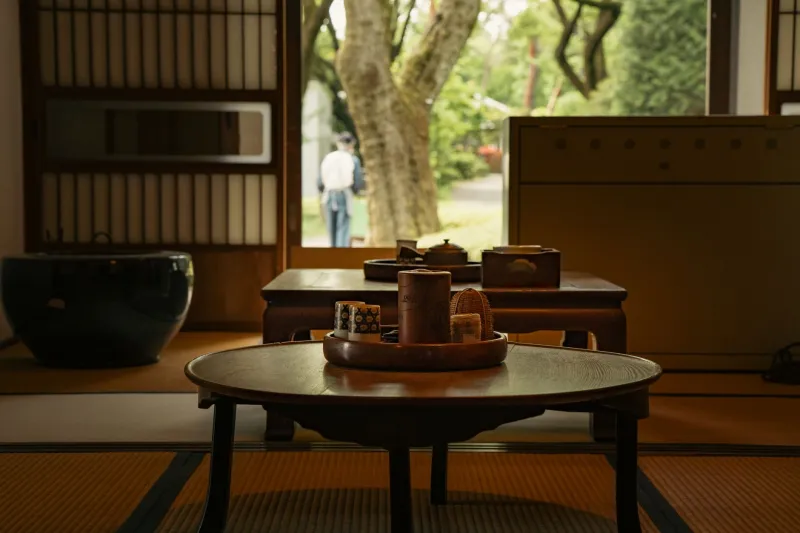
Photo: solo traveler tatami room ryokan Japan, via houseofgeekery.com
There's a particular kind of American traveler who arrives in Japan alone, feels a flicker of interest in staying at a traditional inn, and then talks themselves out of it in about ninety seconds. The reasoning is always some version of the same thing: that's for couples. That's for honeymoons. I'd be the odd one out at dinner.
I think that's the wrong call, and I think it's the wrong call for reasons that have almost nothing to do with romance.
The myth of the couple's inn
Ryokans were never designed as romantic retreats. They were designed as roadside hospitality for travelers — merchants, pilgrims, anyone who needed a hot bath and a meal and a place to sleep before continuing on. The tatami room, the shared bath, the dinner brought to your room: none of that is about two people. It's about restoration.
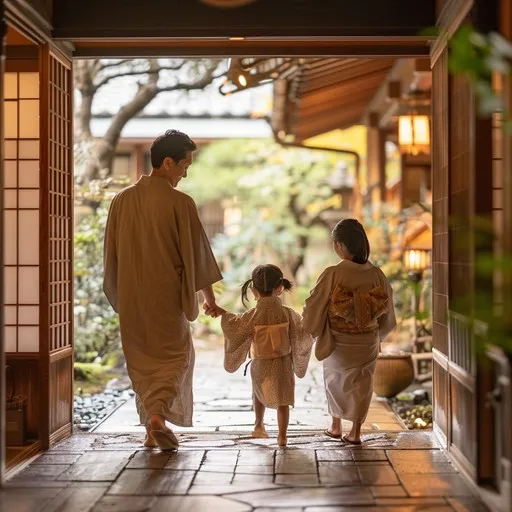
The couple-centric reputation came later, manufactured partly by marketing and partly by the way the Western travel press photographs these places — always a tray for two, always two yukata folded side by side.
What single occupancy actually looks like
Here's the honest part. Not every inn welcomes solo guests, and some that do charge a single supplement, because a room occupied by one person still costs the same to clean, heat, and cook for. That's fair, and it's worth asking about upfront rather than discovering at checkout.
But a growing number of traditional inns actively court solo travelers, particularly outside the biggest cities. The room you're given may be the smaller one, often on a lower floor. What it lacks in square footage it makes up for in the fact that you are not, at any point, standing in a lobby queue behind forty people with luggage.
Dinner for one is not the awkward part
This is the fear I hear most, and it dissolves the moment you arrive. Ryokan meals are served in one of three ways: in your room, in a private dining room, or at an assigned seat in a dining hall. None of those involve you sitting alone at a bar while a host asks if you're waiting for someone.
If anything, dining alone at an inn is a gift. You get the full kaiseki procession — fifteen small courses if it's that kind of place — and no obligation to make conversation while a soup cools in front of you. You can eat at your own pace, ask the server what the mountain vegetable is, and take notes. Nobody thinks it's strange. Half the guests are quietly absorbed in their own meals anyway.
Privacy is the actual product
A hotel gives you a room. A ryokan gives you a whole sequence of quiet spaces: the tatami room, the bath, the corridor with its polished wood floor, the garden you can look at without speaking to anyone.
For a solo traveler, that structure is unusually kind. You're never forced into a social performance. You can be alone without being lonely, which is a distinction that solo travelers understand better than anyone.
Safety, plainly
American travelers ask about this constantly, so let's answer it plainly. Small inns in regional towns are among the safest lodging environments you'll find anywhere. Staff are present, doors lock, neighborhoods are quiet, and the walk to the bath at 6 a.m. involves slippers and a corridor, not a parking garage.
The bigger practical risks are mundane: getting lost on the way from the station, or overdoing it in the onsen after a long travel day.
The attention you get as one person
This is the part nobody tells you. At a twelve-room inn, a solo guest is easy to look after well. The okami-san learns your name on the first afternoon. She notices you skipped the pickled plum at breakfast and mentions it. Someone walks you to the bus stop in the rain.
At a two-hundred-room hotel, you're a reservation number with a key card. At a small inn, you're a person who arrived, and the entire staff knows it. Solo travelers tend to receive more of this attention, not less, because there's nothing else competing for it.
The booking conversation
A few things that make the process smooth:
- Book direct when you can, and say plainly that you're traveling alone. Ambiguity causes problems; clarity doesn't.
- Ask about the single supplement before you commit, so it's a known cost rather than a surprise.
- Weeknights are your friend. Saturday nights at popular inns are priced for couples on an anniversary.
- Smaller onsen towns — Kinosaki, Shuzenji, Nyuto, Kurokawa, Yufuin — tend to be more relaxed about solo bookings than the famous city-adjacent resorts.
The case for going alone
A ryokan is a machine for paying attention: to the season, to the food, to the sound of water in a bath, to the fact that someone folded your yukata while you were out. That kind of attention is easiest to give when you're not also managing a traveling companion's expectations, schedule, or jet lag.
Staying alone at a traditional inn isn't a compromise or a consolation prize. For a certain kind of traveler, it's the most direct line to what these places have been offering for centuries: a hot bath, a good meal, and the rare experience of being looked after by people who noticed you arrived.