Twelve Tiny Rules That Turn You From Tourist Into Trusted Guest
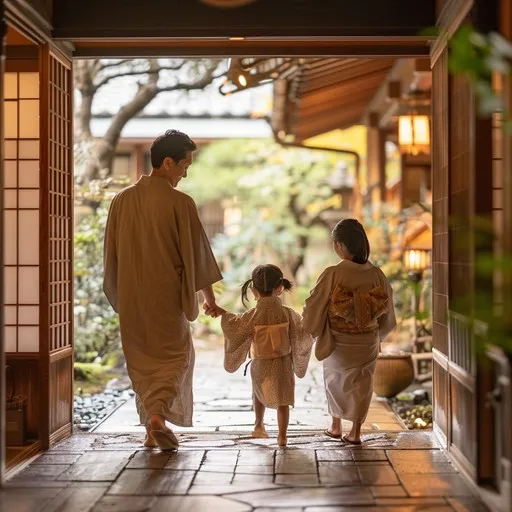
Photo: guest wearing yukata walking through traditional Japanese ryokan hallway with slippers, via images.stockcake.com
Here's the thing about ryokan etiquette: nobody will ever scold you. Your host will smile, quietly fix whatever you did, and never breathe a word. Which is exactly why a little advance intel goes such a long way. These twelve tiny rules aren't about avoiding embarrassment — they're the difference between being treated as a passing tourist and being welcomed like a returning friend.
The Shoes Situation (Yes, It's a Whole Thing)
1. Shoes off at the genkan, always. The sunken entryway is the border between outside and inside. Step out of your shoes onto the raised floor, turn around, and place them neatly facing the door — turned around, not left pointing inward. It takes four seconds and every host notices.
2. Slippers on wood, slippers off on tatami. The ryokan has a slipper logic map: indoor slippers for hallways, no slippers on tatami mats, and separate toilet slippers that live in the bathroom and never, ever leave it. Wearing the toilet slippers into the hallway is the classic gaijin move. You will do it once. Try to make it only once.
3. Barefoot is the correct answer on tatami. Socks are fine (hole-free socks, ideally — see rule 12). Shoes of any kind are not.
The Yukata Files
4. Yes, wear it everywhere inside. That cotton robe in your closet isn't decorative. Wear it to dinner, wear it to the baths, wear it to wander the halls. Nobody thinks you're in pajamas; everyone thinks you're doing it right.
5. Left over right. Wrap the yukata with the left side over the right and secure with the obi belt. Right-over-left is how the dead are dressed at funerals. A small detail, a big difference.
6. Outside strolls depend on the town. In many onsen towns, guests in yukata wandering to the evening footbath or convenience store is a beloved local sight. In others, it's not done. Watch what other guests do, or ask your host — they'll be delighted you asked.
Bath Rules Beyond the Obvious
7. Wash before you soak. Everyone knows tattoos and no swimsuits, but the real rule is the washing station: sit on the little stool, scrub thoroughly, rinse completely, then enter the bath. The bath water is shared by every guest that night. It's a soup you don't want to think about too hard.
8. The small towel has one job. It goes on your head or on the side of the bath — never in the water.
Meals and Manners
9. Don't ghost the dinner. Kaiseki dinners are served at a set time, and the kitchen plates your courses around your arrival. Show up on time, or tell your host in advance if you need to shift. If you have dietary restrictions, flag them when you book — not when the wagyu arrives.
10. Try everything, even the mysterious thing. You don't have to love the fermented fish. But lifting the lid, tasting a bite, and making a small appreciative sound? That's the whole game.
The Small Stuff That Isn't Small
11. Don't tip. We know it feels wrong to an American hand. Resist. Tipping can genuinely confuse or even offend. Your gratitude belongs in words — a warm gochisousama deshita after dinner lands harder than a twenty.
12. Bring a tiny gift from home. This one's optional but magic: a small omiyage — a box of local chocolates from your state, maple syrup, anything modestly regional — offered at check-in. It's a custom guests almost never know about, and it reliably turns a polite host relationship into a genuinely warm one.
The Payoff
Here's what happens when you get these right: the grandmother who runs the place starts leaving extra sweets in your room. The innkeeper draws you a hand-written map to the local shrine. You get the corner room with the better view on your second night, unprompted.
None of these rules require perfection. Japanese hosts forgive everything except carelessness with their home. Show a little attention, take your shoes off at the right time, and you'll cross the invisible line from visitor to guest — usually by the first dinner.