You Came as a Guest. You're Leaving as a Student.
You booked the ryokan for the tatami floors and the kaiseki dinner. Maybe for the onsen, maybe for the Instagram moment of a perfectly folded yukata laid across a low wooden table. What you probably didn't book it for was a fundamental rethinking of how you move through your day.
And yet, that's what tends to happen.
Stay at a traditional Japanese inn long enough — even just one night, if you're paying attention — and something starts to shift. The innkeeper who greets you at the gate, who arranges your slippers at the precise angle that makes stepping into them feel effortless, who places your tea tray with the kind of unhurried care that makes you feel almost embarrassed about how fast you usually drink your morning coffee — that person is teaching you something. They're just not calling it a lesson.
The Classroom Has No Desks
American travelers are used to hospitality that performs for them. The hotel concierge recommends the restaurant. The resort staff sets up the beach chairs. Service, in most contexts we know, flows in one direction: toward the guest, who receives it passively and moves on.
Ryokan hospitality doesn't work that way. It's not transactional. It's relational — and quietly instructional.
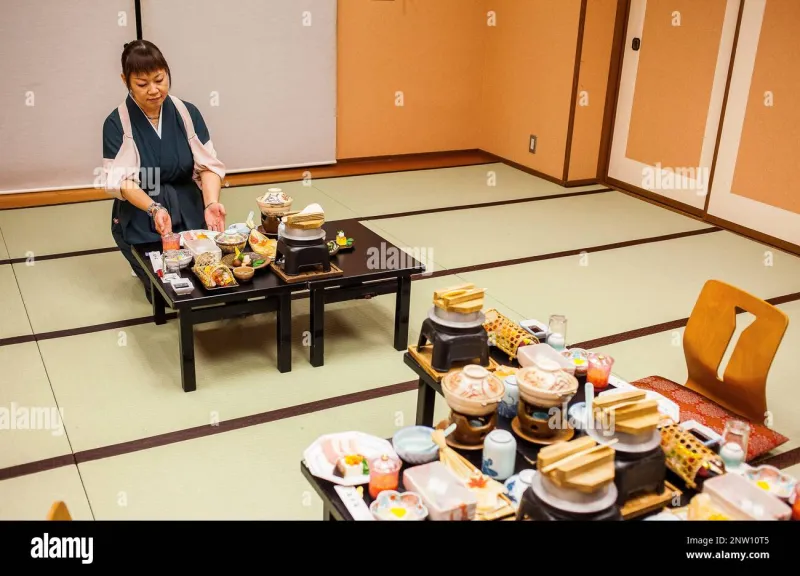
Watch how your innkeeper handles a piece of lacquerware. Not with the brisk efficiency of someone moving through a checklist, but with a kind of attentive slowness that signals: this object matters. Watch how they describe the regional vegetable in your evening meal — not as a menu recitation, but as a small story about a nearby farm, a particular season, a flavor that won't exist in exactly this form three weeks from now. Watch how they fold back your futon in the evening, and notice that it's not just a bed being made. It's a quiet invitation to rest that has been considered.
None of this is accidental. The architecture of ryokan hospitality — built over centuries — is designed to draw guests out of passive consumption and into active awareness. You start noticing things. You start caring about things you didn't know you could care about.
Seasonality Isn't a Trend Here. It's a Practice.
One of the first things a ryokan innkeeper will teach you, without using the word "teach," is how to pay attention to what season you're actually in.
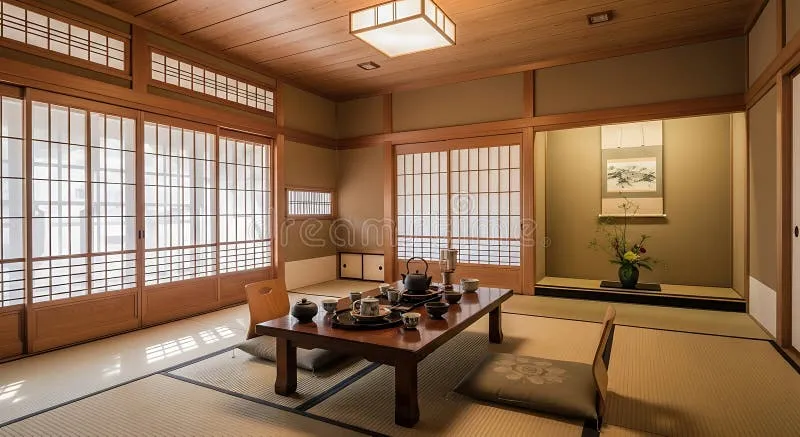
Back home, most of us experience seasonality as a vibe — pumpkin spice in October, rosé in June. In a traditional inn, it's structural. The scroll hanging in your room's tokonoma alcove references the current season. The flower arrangement beside it uses what's blooming right now, not what's available year-round from a wholesale supplier. Your dinner is built around ingredients at their peak this week, not this quarter.
The cumulative effect is disorienting in the best possible way. By the end of your first full day, you've been reminded — over and over, through objects and food and small rituals — that you are a person existing in a specific moment in time. Not a consumer moving through an experience designed to feel timeless and repeatable.
That's a lesson a lot of us in the US genuinely need. We live in a culture that has largely decoupled daily life from the natural world. The ryokan quietly reconnects the two, and your innkeeper is the one holding the thread.
Craft Is Not a Hobby. It's a Commitment.
At some point during your stay, you'll probably encounter something handmade. A ceramic cup that's slightly uneven in a way that makes it feel more valuable, not less. A wooden tray that's been lacquered so many times over so many years that it has a depth you can almost see into. A tatami mat that smells like dried grass because it is dried grass, woven by someone who has been doing exactly this for decades.
Your innkeeper knows who made these things. Often, they can tell you.
This is one of the more quietly radical aspects of the ryokan experience for American travelers: the objects around you have provenance. They come from somewhere, made by someone, using techniques that took years to learn. In a country — and a culture — where most of what surrounds us is anonymous and disposable, this lands differently than you'd expect.
You don't have to become a ceramics enthusiast or a lacquerware collector to feel it. You just have to notice that you're holding something that someone cared about making. And that your innkeeper cared about acquiring it. And that it was placed in front of you with intention.
That noticing? That's the lesson.
How to Actually Receive What's Being Offered
Here's the practical part — because this is a travel tips site and you deserve something actionable.
If you want to get the most out of this particular dynamic at a ryokan, slow down enough to be present for it. That sounds obvious. It isn't.
Ask questions, but don't rush the answers. When your innkeeper explains the dish in front of you, don't nod and pick up your chopsticks immediately. Let the explanation land. Ask where the ingredient is from. Ask how it's prepared. You're not being high-maintenance; you're being the kind of guest a ryokan is actually built for.
Use the common spaces. The garden, the entryway, the small sitting area near the front desk — these aren't just decorative. They're places where incidental interaction happens, where your innkeeper might show you something, explain something, or simply move through the space in a way that you can observe and absorb.
Accept help with the unfamiliar. The yukata, the onsen etiquette, the order of a multi-course meal — if you're not sure, say so. Innkeepers at traditional properties are not going to make you feel foolish. They're going to show you, carefully, in a way that respects both your curiosity and the tradition itself.
Notice what's missing. There's no background music competing for your attention. No television defaulting to on. No lobby bar designed to keep you spending. The absence of distraction is intentional — it's the inn creating conditions for you to actually be somewhere, rather than passing through.
The Lesson You Didn't Know You Were Taking
By the time you check out — and if you've stayed at a ryokan, you know that checkout is its own kind of ceremony — something will have shifted. You might not be able to name it immediately. Travelers often describe it as a kind of recalibration: a new sensitivity to slowness, to craft, to the way a meal can be more than fuel and a room can be more than a place to sleep.
That's the ryokan working as intended. Not as a hotel with prettier aesthetics, but as a living expression of a culture — one that your innkeeper has spent their career maintaining, refining, and, when the right guests show up, quietly passing along.
You came as a guest. You booked a bed and some meals and maybe a soak in a hot spring.
What you're leaving with is harder to put on a packing list — but it's probably the most valuable thing you'll bring home from Japan.