Nobody Told You Anything — And Yet Everything Was Perfect: The Hidden Language of Japan's Ryokan Hosts
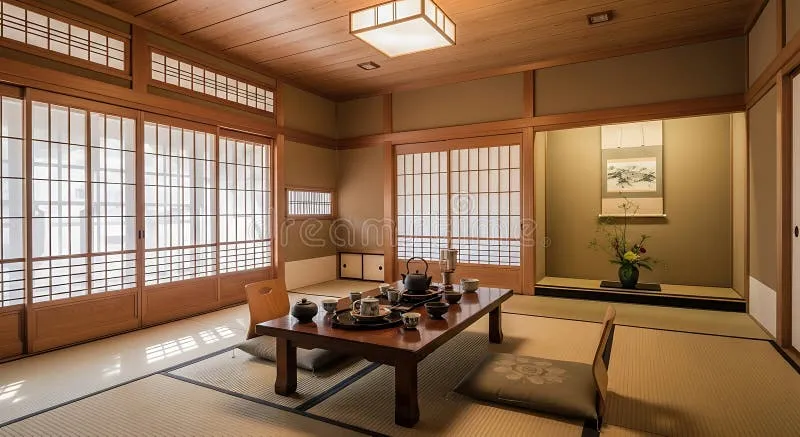
Photo: Japanese ryokan innkeeper serving tea traditional tatami room, via thumbs.dreamstime.com
You didn't request extra tea. You didn't mention that your feet were tired. You definitely didn't say anything about needing a quieter room away from the courtyard. And yet, somehow, all of those things were handled before you even thought to bring them up.
If you've ever stayed at a traditional Japanese inn — a ryokan — you've probably had that slightly disorienting moment where you realize the staff has been one step ahead of you the entire time. It doesn't feel intrusive. It doesn't feel like surveillance. It just feels like... being genuinely cared for. Which, if you're coming from a world of "How can I help you today?" and "Is there anything else I can do for you?" might be the most surprising thing about the whole trip.
So what's actually going on? And why does it hit American travelers so differently than guests from other parts of the world?
The Loudest Thing in the Room Is What Nobody's Saying
Western hospitality — and American hospitality especially — runs on a pretty explicit communication model. You ask for what you need. The staff delivers. Everyone confirms the transaction is complete. It's efficient, it's clear, and it works fine. But it also puts the entire burden of knowing what you want squarely on your own shoulders.
Ryokan hospitality operates on a completely different frequency. Instead of waiting for a verbal request, experienced innkeepers — and often the entire staff — are trained to read environmental and behavioral cues that most guests don't even realize they're broadcasting.
A guest who pauses near the window for a few seconds longer than usual might be signaling that the room temperature isn't quite right. Someone who moves their tea cup to the edge of the low table without drinking from it might be full, or tired, or ready for the meal to transition. A couple who arrives speaking quietly and walking slowly after a long travel day gets a different kind of welcome than one that comes in energized and asking questions.
None of this is written in a manual. It's absorbed over years of close observation — and it's rooted in a cultural communication style that Japan broadly refers to as ma (the meaningful use of space and silence) and a practice of reading unspoken emotional states called kuuki wo yomu, which translates roughly to "reading the air."
Reading the Air: A Skill Most of Us Were Never Taught
In Japan, being socially fluent doesn't just mean knowing what to say — it means knowing what not to say, and understanding what others are expressing without words. Children absorb this skill early. It shapes professional interactions, family dynamics, and yes, the hospitality industry in a deeply practical way.
For ryokan staff, reading the air is a professional discipline. They're watching for the pace at which you move through the inn. They notice whether you're making eye contact or looking down. They observe how you handle your shoes at the entrance (a moment that reveals more than you'd think). They pay attention to whether you ordered something and then ate it slowly, quickly, or not at all.
This information feeds into a quiet, ongoing recalibration of how they're serving you — adjusting timing, adjusting offerings, adjusting presence. Sometimes that means appearing with something you need. Sometimes it means making themselves invisible so you have space.
For American travelers who are used to being asked directly, this can feel almost mystical. But it's not magic. It's sustained attention.
The Room Itself Is Part of the Conversation
Here's where it gets interesting: the physical environment of a ryokan isn't just aesthetically intentional — it's communicatively intentional. Every element of the space is designed to help guests relax into a more expressive, less guarded version of themselves, which in turn makes it easier for staff to read what they need.
The low furniture encourages you to slow down and sink in. The absence of a television as the room's focal point removes the default retreat most Americans fall into. The arrangement of the futon, the placement of the in-room tea set, the specific objects chosen for the tokonoma (the decorative alcove) — all of it is calibrated to create a particular emotional register.
When you feel genuinely at ease, you stop performing. And when you stop performing, you become much easier to read.
This is a fundamentally different design philosophy than the American hotel model, which tends to optimize for control — giving guests maximum individual control over their environment through technology, menus, and customization options. Ryokans optimize for receptivity. The idea is that once you've let the environment in, the environment (and the people who tend it) can take care of you properly.
Why This Catches Americans Off Guard
There are a few reasons this style of hospitality lands so unexpectedly for US travelers specifically.
First, we're not used to being read. American culture prizes self-expression and explicit communication. We're encouraged to ask for what we want, advocate for ourselves, and speak up when something isn't right. The idea that someone might already know what we want — without us saying it — can feel either incredibly comforting or mildly unsettling, depending on your personality.
Second, we tend to interpret silence as a gap that needs filling. When a ryokan host doesn't immediately ask "How was your day?" upon seeing you in the hallway, an American brain often registers that as coldness or disinterest. It's neither. It's a read. They can see from the way you're walking that you're tired and don't want to talk. The silence is the hospitality.
Third, we're wired to transact. Even in high-end American hotels, the interaction model is fundamentally a service transaction — one party has needs, the other party fulfills them. Ryokan hospitality isn't really transactional. It's relational. The goal isn't to complete a request; it's to create an ongoing state of wellbeing. That shift takes some getting used to.
How to Actually Receive This Kind of Care
If you want to get the most out of a ryokan stay, the single most useful thing you can do is slow down and let yourself be observed. That sounds passive, but it's actually a practice.
Stop managing the interaction. You don't need to flag down staff to tell them everything is fine. You don't need to over-explain your preferences upfront. You don't need to fill the silence. Just be present in the space, move at your own natural pace, and trust that what needs to be noticed will be noticed.
If something genuinely isn't working for you, say so — ryokan staff are not mind readers, and clear communication is always welcome. But give the experience room to breathe before you start optimizing it. The system is already working, even when it looks like nothing is happening.
That's the part that takes the longest to understand: the nothing is something. The absence of fuss, the quiet competence, the small adjustments you barely register — that's the whole thing. That's what people come back for.
And once you've felt it, the question-and-answer model of hotel service starts to feel like a lot of unnecessary noise.