Ryokan Sticker Shock Is Real — Here's What You're Actually Paying For
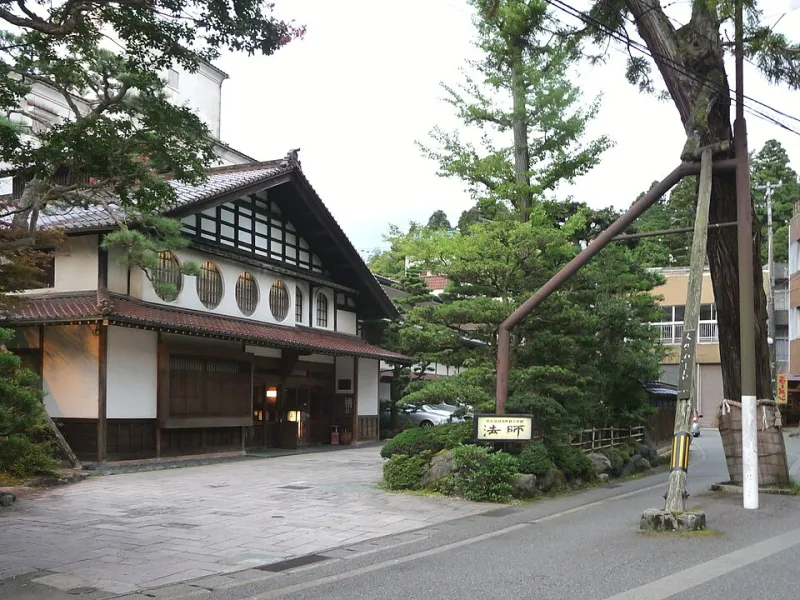
Photo: Namazu-tron, CC BY-SA 3.0, via Wikimedia Commons
The first time you search for a place to stay in Japan and land on a ryokan listing, your thumb stops scrolling. Two hundred and eighty dollars. Per night. Per person. For a room with no bed in the Western sense and a floor you're apparently supposed to sleep on?
Before you close the tab and retreat to a familiar hotel chain, take a breath. That number isn't what it looks like — and once you understand what's folded into it, ryokans start to make a different kind of financial sense. Sometimes they're even the cheaper option.
The Big Secret: That Price Includes Dinner
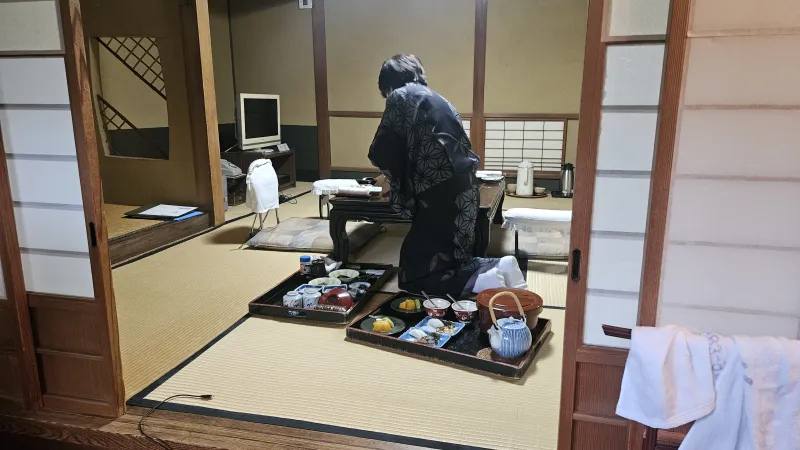
Here's what most American travelers don't realize until it's too late: the headline price at most traditional inns includes breakfast, and usually dinner too — and not gas-station dinner, but multi-course regional cooking that would run you $80–150 per person at a restaurant in Kyoto or Tokyo.
So when you see $350 per person, per night, mentally subtract $100–150 for the food. Now subtract breakfast ($25–40). Suddenly you're looking at a $160–180 room rate with two exceptional meals attached. Compare that to a $220 hotel room in downtown Osaka where a continental breakfast costs extra and dinner is on you — in a city where dining out adds up fast.
The pricing model is called harai-dai, an all-inclusive per-person rate, and it's been the standard for generations. It's less like booking a hotel and more like booking a small resort where everything — meals, the hot spring, the service — is bundled in.
What You Get at Each Price Tier
Under $150 per person: Minshuku and rural family inns. These are the countryside gems — family-run places in towns like Kiso Valley, rural Tohoku, or the Noto Peninsula. Expect a tatami room, home-style dinners built on local ingredients, a simple bath (sometimes a shared family onsen), and hosts who will insist you eat more rice. You're not paying for luxury; you're paying for a seat at a family's table, basically. If your budget looks like a backpacker's, this tier is how you experience the tradition without the bill.
$150–300 per person: The sweet spot. This is where most first-timers should live. Think onsen towns like Nozawa Onsen, Shimanami, or smaller properties around Lake Kawaguchi. You'll get a proper tatami room, dinner that's a genuine step up (often 8–10 courses), access to mineral hot spring baths, and attentive but unpretentious service. For the cost of a mid-range Marriott in Chicago, you get an evening that feels like a cultural event.
$300–500 per person: The full experience. Now you're in Hakone, Kurokawa, or a noted onsen town, and the kaiseki dinner becomes the star — seasonal, local, occasionally theatrical. Rooms may have private open-air baths. The staff-to-guest ratio climbs. This is the tier where the omotenashi (anticipatory hospitality) people write novels about really shows up.
$500+ per person: The splurge. Famous historic ryokans, rooms with private rotenburo overlooking valleys, kaiseki menus designed around that morning's market haul. Worth it once in your life? Absolutely. Necessary to enjoy a ryokan? Not even slightly.
The Hidden Costs (and Hidden Savings)
A few things that can nudge the bill up:
- Alcohol. Dinner drink pairings and sake are usually extra. Budget $20–40 if you want to drink well.
- Private baths. Many ryokans rent family baths by the hour ($30–60 per session) even when the public baths are free.
- One-night vs. multi-night pricing. Some inns charge a small premium for single-night stays, since turnover is labor-intensive.
- Peak season surcharges. Cherry blossom season, Golden Week, and New Year can add 30–50%.
And the savings hiding in plain sight: no taxis to find dinner, no restaurant reservations, no tipping (seriously — don't), and often free shuttle service from the train station.
Timing Your Booking Like an American
Japan's booking calendar doesn't align with the US school calendar, which works in your favor if you plan smart.
- Book 4–6 months out for cherry blossom season (late March–mid April) and autumn foliage (November). Popular ryokans sell out their best rooms almost a year ahead for these windows.
- Shoulder season gold: late May–June and January–February (excluding New Year). Prices soften, and winter stays — snow falling into an outdoor hot spring — are arguably the best version of the experience.
- Avoid Golden Week (roughly April 29–May 5), when domestic travelers flood the market and prices spike.
- Weekday stays are routinely 15–25% cheaper than Friday and Saturday nights, and quieter too.
A Simple Budget Template
For a two-night, one-ryokan trip for two people:
- Ryokan (mid-tier, 2 nights, per person incl. meals): $600–900
- Drinks and extras: $80–120
- Transport to a rural onsen town: $60–150 by train
- Total: roughly $1,300–2,100 for two
Set against two nights of hotel rooms plus four restaurant meals plus the experience you'd have paid extra to have, the math starts tilting hard in the ryokan's direction.
The sticker shock is real — but it's mostly an illusion. You're not paying $300 for a futon. You're paying for dinner, a hot spring, a story, and a night of the deepest sleep you'll have in Japan.