They Never Had to Ask: The Quiet Genius Behind Japan's Most Gifted Innkeepers
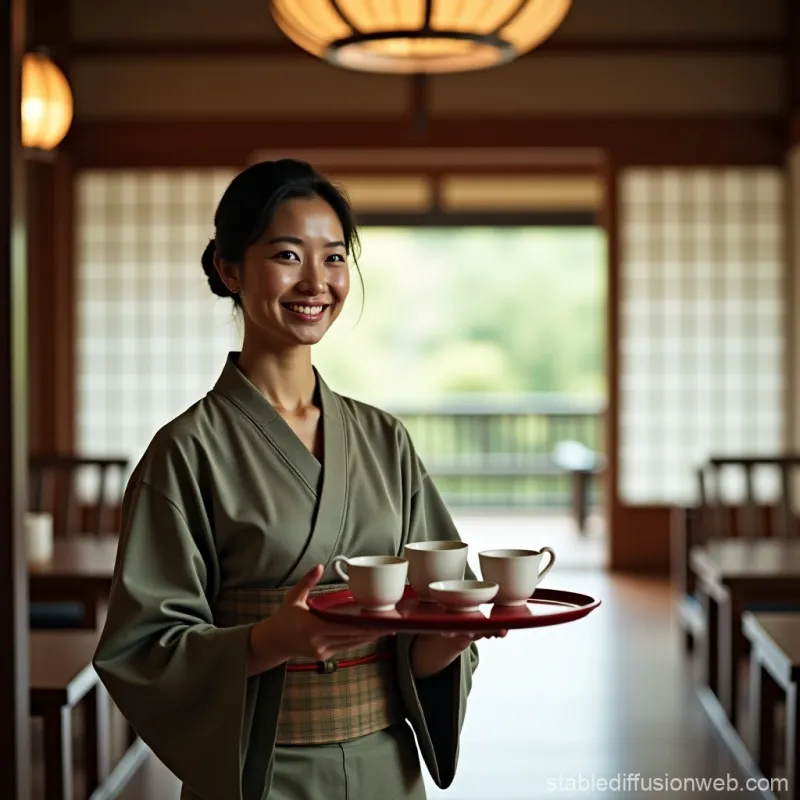
Photo: Japanese ryokan innkeeper serving tea traditional tatami room, via imgcdn.stablediffusionweb.com
There's a moment that catches a lot of first-time ryokan guests off guard. You've just finished dinner. You haven't said a word. You haven't pushed a button or flagged anyone down. But somehow, when you slide open the door to your room, your futon has been laid out, the lights have been dimmed to exactly the right level, and there's a small cup of hot tea sitting on the low table as if it had been waiting for you all along.
No one asked what you wanted. No one needed to.
This is the part of Japanese hospitality that doesn't translate easily into a TripAdvisor review or a hotel star rating. It's something closer to instinct — except it isn't instinct at all. It's a deeply practiced, culturally rooted skill that Japan's most respected innkeepers have spent entire lifetimes developing. And once you understand how it works, you'll never think about hospitality the same way again.
Reading the Room (Literally)
At most hotels, the interaction model is pretty transactional. You arrive, you check in, you ask for things, you receive them. The guest does the communicating. The staff responds.
At a traditional Japanese inn — a ryokan — the model is almost inverted. The nakai-san, the inn attendant who looks after your stay, is watching from the moment you step through the door. Not in a surveillance kind of way. In a tuned-in, deeply attentive kind of way.
They notice how you walk. Whether you're moving slowly or with urgency. Whether your shoulders are up near your ears or dropped and relaxed. They notice how you handle your shoes at the entryway, how you respond to the welcome tea, whether your eyes linger on the garden or drift toward the bath schedule on the wall. All of that information is being quietly processed before a single word is exchanged.
In Japan, there's a concept called ma — a word that roughly translates to negative space, or the meaningful pause between things. Skilled innkeepers are masters of ma. They understand that what a guest doesn't say is often more telling than what they do. Silence isn't awkward; it's informative.
The Philosophy Underneath the Practice
The hospitality philosophy driving all of this has a name most Americans have heard at least once: omotenashi. It gets translated as "wholehearted hospitality," but that doesn't quite capture the full weight of it.
Omotenashi isn't about being friendly or efficient. It's about anticipating needs before they become requests — serving someone so completely that they never have to feel the discomfort of wanting something they don't have. The goal is a kind of frictionless experience where the guest feels genuinely cared for, not just serviced.
What makes this different from, say, a five-star concierge operation in New York or Las Vegas is the absence of performance. There's no scripted greeting, no upsell, no name-dropping of your loyalty tier. The attention is quiet and it's personal, and it comes from a place of genuine respect for the guest as a whole person — not as a revenue source.
Many of Japan's most celebrated innkeepers will tell you that omotenashi isn't something you can learn from a manual. You absorb it over years of watching senior staff, of making small mistakes and correcting them, of paying close attention to what makes one guest settle in and another stay slightly tense all evening.
The Details That Make the Difference
So what does this actually look like in practice? A few examples that might surprise you:
Temperature and timing. A skilled nakai-san knows roughly how long it takes for a guest's body to cool down after a hot bath. They'll have your room at a comfortable temperature and your evening tea freshly poured to meet that window — without you ever mentioning you were planning to soak.
Portion calibration. During a multi-course kaiseki dinner, a good innkeeper watches how much you eat at each course. If you're leaving food on the plate consistently, they may quietly reduce the size of later courses so you don't feel overwhelmed or wasteful. If you're eating enthusiastically, they might arrange for a slightly more generous pour of the house sake.
Emotional attunement. This one's harder to quantify, but experienced innkeepers talk about it openly. If a couple arrives and there's a tension between them — travel fatigue, a disagreement on the road, the low hum of stress — a thoughtful host will give them more space. Fewer check-ins. A longer gap before dinner. Room to breathe. Conversely, a solo traveler who seems a little lonely might get a bit more conversation woven into the service naturally, without it ever feeling forced.
Why This Matters for American Travelers
For most Americans, the default hospitality script is built around explicit communication. You ask, you receive. Needs are stated, not sensed. That's not a criticism — it's just the cultural baseline most of us are working from.
Which is exactly why a stay at a well-run ryokan can feel almost disorienting in the best possible way. You realize, sometimes halfway through your first evening, that you haven't had to manage your own experience at all. Someone else has been quietly holding it together for you, reading the room, making micro-adjustments, staying one step ahead.
For travelers who are used to being "on" — planning every meal, optimizing every itinerary, staying perpetually plugged in — this can feel like setting down a weight you didn't know you were carrying.
What You Can Do to Meet It Halfway
Here's the thing about omotenashi: it's not a one-way street. The best ryokan experiences happen when guests are willing to slow down enough to be read.
That means resisting the urge to fill every silence with a request. It means being present at meals instead of photographing every dish before tasting it. It means letting yourself arrive without an agenda for the evening.
Japanese innkeepers aren't mind readers. They're skilled observers of human beings in a state of rest. The more you can actually get into that state, the more they have to work with — and the more precisely they can calibrate your experience to what you actually need, even when you couldn't have articulated it yourself.
That's the quiet genius of it. Not magic. Not mystery. Just a lifetime of paying attention, in service of making you feel, for a few days at least, like someone has genuinely got you covered.
And honestly? After a few nights of that, going back to a standard hotel checkout line hits a little differently.