Empty Hours, Full Life: What a Night at a Japanese Inn Teaches You About the Art of Rest
The Itch to Be Productive Never Fully Goes Away
You've probably done it on vacation. Checked email at the pool. Mapped out a 12-stop itinerary for a city you've never visited. Felt vaguely guilty about napping at 2 p.m. even though you flew nine time zones to get there.
That's not a personal failing — it's just what American culture does to you. We treat busyness like a virtue and rest like something you have to earn. Even our vacations tend to look suspiciously like optimized side projects.
Then some travelers end up at a ryokan in Japan, and something shifts.
Not dramatically. Not in a way that's easy to explain over drinks back home. But somewhere between the second cup of green tea and the moment you realize you've been watching a maple tree sway outside your shoji screen for twenty minutes — without once reaching for your phone — something quietly rearranges itself inside you.
Ma: The Concept That Has No Good English Translation
In Japanese aesthetics, there's a word — ma — that doesn't translate cleanly into English. It's often described as "negative space" or "meaningful emptiness," but those definitions flatten something that's actually quite alive.
Ma is the pause between notes in music. It's the deliberate gap in a garden path that slows your walk. It's the unhurried moment between when your host sets down your tea and when she quietly leaves the room. It's not absence — it's intentional space that gives everything around it more weight.
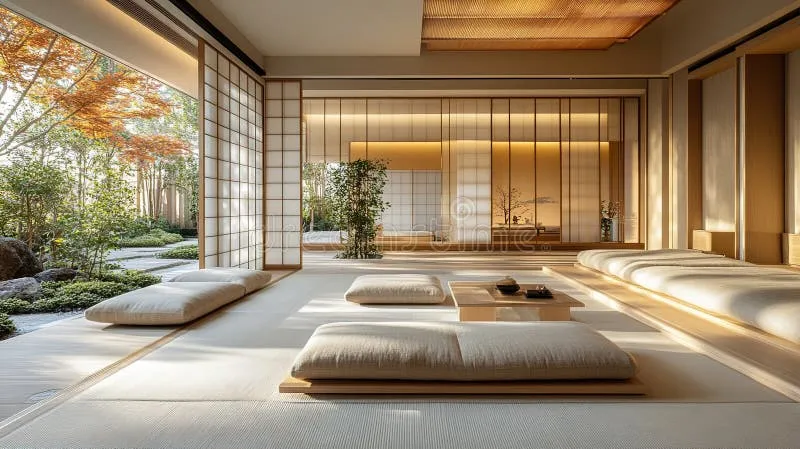
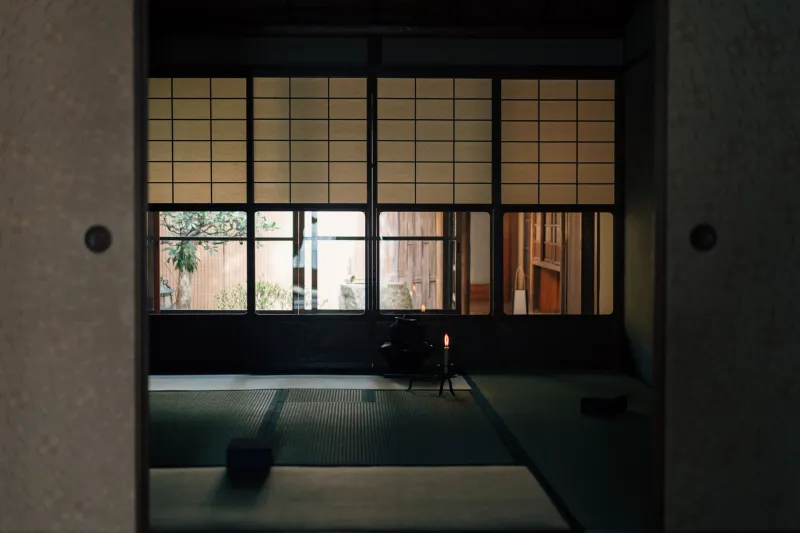
American design philosophy tends to fill space. More features, more content, more stimulation. Japanese traditional aesthetics, particularly in ryokan architecture and hospitality, does the opposite. A tatami room might hold almost nothing: a low table, a single scroll painting, a small ceramic vase with one stem of something seasonal. The emptiness isn't a lack of effort. It's the point.
When you sleep in a room built around that philosophy, it starts to work on you.
What the Schedule Actually Looks Like (Or Doesn't)
Here's something that surprises a lot of first-time ryokan guests: there isn't much to do.
That sounds like a criticism. It isn't.
A typical ryokan stay orbits around a few anchor moments — a kaiseki dinner in the evening, a Japanese-style breakfast in the morning, and access to an onsen bath whenever the mood strikes. In between, the hours are yours. Unscheduled. Unguided. Just... open.
For travelers raised on theme park efficiency and hotel concierge itineraries, this can feel disorienting at first. What do you mean there's no activity list? Where's the fitness center with the TV screens on the treadmills?
But give it a few hours. Take a slow walk through the inn's garden. Sit by the window and watch the light change. Flip through the inn's curated book of local history with no intention of memorizing any of it. Soak in the bath not as a wellness checkbox but just because the water is the right temperature and the cedar smells incredible.
What you're practicing — without a formal lesson or a wellness app — is something closer to ma than most Americans have experienced since childhood.
Seasonal Awareness as a Form of Attention
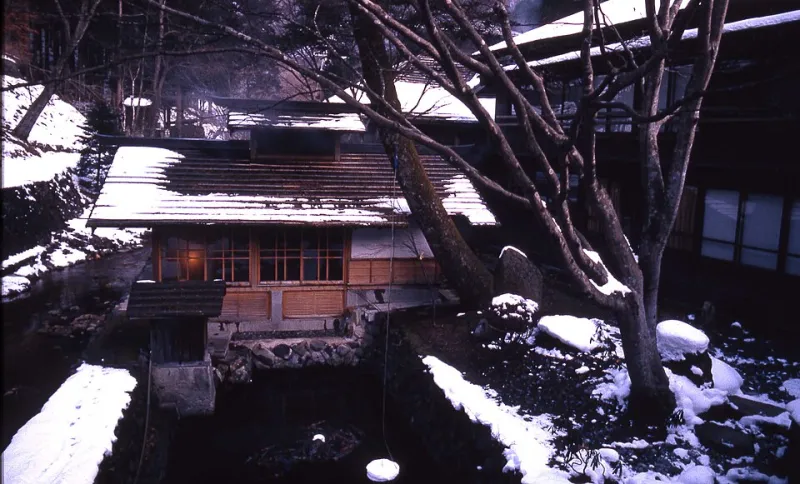
Ryokans are deeply connected to the rhythms of the Japanese calendar in a way that most Western hotels simply aren't. The food on your dinner tray reflects what's growing right now, in this region, in this specific week of autumn. The flower arrangement in your room was chosen because that particular bloom is at its peak for maybe another ten days. The view from the common bath changes meaning depending on whether there's snow on the mountains or cherry blossoms in the courtyard.
This isn't décor. It's a quiet invitation to pay attention to where you are in time.
For Americans who live in climate-controlled offices, order strawberries in January, and lose track of what month it is somewhere around the third Zoom call of the morning — this kind of seasonal attunement feels almost radical. The ryokan doesn't announce it or make it a selling point. It just builds it into the experience, and you absorb it without trying.
There's something humbling about that. You realize how rarely you notice the season you're actually in.
Slowness as a Skill You Can Relearn
One of the more counterintuitive things about a ryokan stay is that it doesn't feel slow in the way that waiting in line feels slow. It feels slow in the way that a really good meal with people you love feels slow — like time has expanded rather than stalled.
That's a learned experience, and it takes a little patience to get there. The first evening, your brain might still be running its usual loops: what should I be accomplishing, what am I missing, is this enough. That's normal. You're detoxing from a very demanding operating system.
By the second morning, most guests report something different. A quieter internal pace. Less urgency. A genuine curiosity about small things — the texture of the yukata fabric, the sound of rain on the roof tiles, the way the inn's staff moves through the hallways with a kind of unhurried intentionality that never tips into indifference.
That's omotenashi — the Japanese philosophy of hospitality — doing its work. But it's also ma in action. The inn has created enough space for you to actually land somewhere.
What You Bring Home
The honest answer is that most people don't fully maintain their ryokan pace once they're back in Atlanta or Denver or wherever life is waiting for them. The inbox refills. The calendar fills back up. The hustle reasserts itself.
But something tends to stick.
Maybe it's a small ritual — a cup of tea in the morning with the phone face-down. Maybe it's a new tolerance for an unscheduled Sunday afternoon. Maybe it's just the memory of what it felt like to sit with nothing to do and not feel like you were wasting something.
That's not nothing. In a culture that monetizes attention and gamifies productivity, even a faint memory of stillness can function as a kind of compass.
A ryokan stay won't fix your relationship with rest in a weekend. But it will give you a reference point — a felt sense of what it's like when time opens up instead of closing in. And sometimes, that's exactly the kind of souvenir worth carrying home.
Ready to find the right ryokan for your first slow trip? Browse traditional inns across Japan on On Yado — from mountain retreats to coastal hideaways, we'll help you find the one that fits your pace.