She Remembered You Ordered Extra Pickles Two Summers Ago
You checked in three years ago. You mentioned, almost in passing, that you preferred your futon positioned closer to the window. You asked for an extra pillow. You picked the pickled daikon off your neighbor's plate at dinner because you couldn't get enough of it.
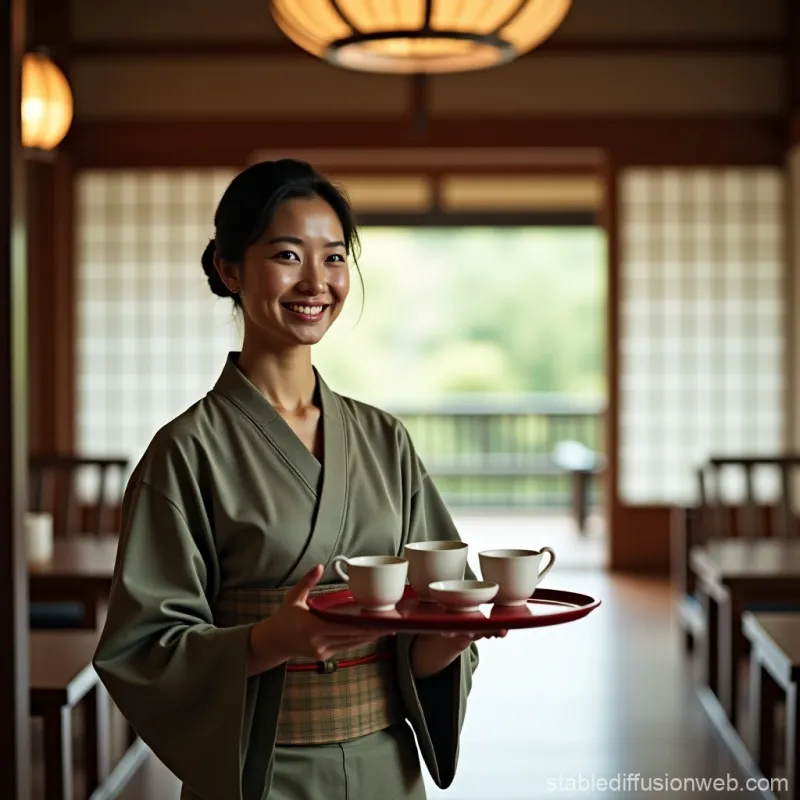
When you walked back through the same sliding door this summer, your innkeeper bowed, smiled, and led you to a room where the futon was already placed near the window. An extra pillow sat folded on top. And at dinner, the small dish of pickled daikon beside your plate was noticeably larger than everyone else's.
She didn't say a word about it. She didn't need to.
This kind of moment — equal parts eerie and deeply touching — is one of the most talked-about experiences among Americans who return to Japan's traditional inns. And while it can feel almost supernatural, the reality behind it is both practical and profoundly human.
It Starts With a Philosophy, Not a System
Before we get into the mechanics, it helps to understand the why. Japanese innkeeping, particularly at family-run ryokan, is shaped by a concept called omotenashi — a form of hospitality that goes far beyond service. It's about anticipating needs before they're spoken, and treating every guest as a person worth truly knowing.
In that framework, remembering a guest isn't a clever business tactic. It's an expression of respect. Forgetting, by contrast, would carry a quiet kind of shame.
This distinction matters because it reframes the entire conversation. American hotels invest heavily in loyalty programs, CRM software, and preference databases. The goal is retention. At a traditional Japanese inn, the goal is relationship. Those two things might look similar from the outside, but they feel completely different when you're the guest on the receiving end.
The Notebook That Predates Every App
Ask an experienced innkeeper how she keeps track of returning guests, and don't be surprised if she pulls out a worn, handwritten notebook rather than pointing to a screen.
Many family-run inns have maintained guest records for generations — physical logs that note not just names and dates, but observations. Which tea did they prefer? Did they seem tired when they arrived? Did they mention a health concern, a celebration, a loss? Did the children fight at dinner or did the couple seem newly in love?
These notes aren't clinical. They read more like a thoughtful friend's diary entries about someone they care about. And over years, they build into something remarkable: a portrait of a person across time.
Some inns have transitioned parts of this system to digital tools, but many innkeepers are careful to preserve the human layer. A guest record that reads "prefers quiet, mentioned late father loved this region" carries a weight that a dropdown menu in a reservation system simply cannot replicate.
Why You Feel It More Here Than Anywhere Else
American travelers are used to a version of personalization that's mostly algorithmic. Your streaming service knows your taste in movies. Your coffee app remembers your order. Your airline has your seat preference on file. These conveniences are useful, but they don't move you.
Being remembered by a person — genuinely, specifically, without prompting — hits differently. It signals that you mattered enough to someone that they held onto a piece of you.
At a ryokan, that feeling is amplified by the intimacy of the setting itself. You're not one of four hundred rooms. You might be one of eight. The innkeeper has likely been in this building for decades. Her mother may have run it before her. When she remembers you, it carries the weight of a place that has seen thousands of guests and still chose to hold onto you.
That's not a feature. That's a relationship.
What Returning Guests Actually Experience
Talk to Americans who've gone back to the same ryokan more than once, and you'll hear a consistent theme: the second visit felt like coming home.
Not home in a vague, marketing-speak way. Home in the sense that someone was genuinely glad you came back. That the room felt like it was set up for you, not for a generic traveler. That dinner included something you mentioned loving, almost as an afterthought, years earlier.
Some guests report that their innkeeper asked about a family member by name — someone they'd mentioned briefly during a previous stay. Others describe being greeted with a small, unrequested gesture tied to a past conversation: a book left on the table about a region they said they wanted to explore, a local snack they'd admired in a shop window during a previous visit.
None of it is performed. That's the part that gets people. There's no fanfare, no "we noticed you mentioned..." preamble. It just appears, quietly, as if it were always going to be there.
What American Hospitality Could Learn Here
This isn't a critique of American hotels — it's more of an invitation to think about what hospitality could look like when it's treated as a craft rather than a transaction.
The ryokan model works in part because of scale. Smaller properties mean fewer guests, which makes genuine attention possible. But the underlying philosophy — that remembering someone is an act of care, not a data strategy — is transferable.
Some boutique hotels in the US are already moving in this direction, training staff to take genuine notes and build real familiarity with repeat guests. The ones doing it well have quietly built cult followings. It turns out people will go very far out of their way to stay somewhere they feel truly seen.
Japan's innkeepers figured that out a long time ago. They just didn't need a loyalty points program to prove it.
Before You Go Back
If you're planning a return trip to a ryokan you've stayed at before, a few things are worth knowing.
First, mention it when you book. Let them know you've stayed before and when. This gives the innkeeper time to pull your records and prepare. Second, don't be shy during your stay about sharing preferences — not as demands, but as conversation. Good innkeepers are listening even when it doesn't seem like it. Third, if something was particularly meaningful during a past visit, it's completely appropriate to mention it. You're not being high-maintenance. You're giving them something to work with.
And if you arrive to find the futon already near the window without having said a word?
Just let yourself feel it. That's the whole point.