You Paid More to Be Left Alone — And It Was Worth Every Penny
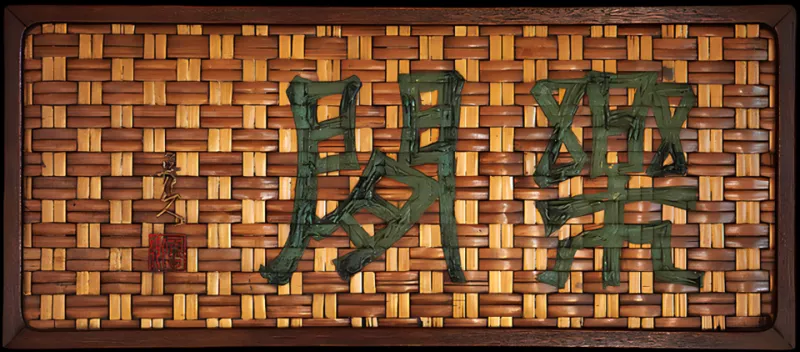
Photo: Rosanjin, Public domain, via Wikimedia Commons
Somewhere between your third Slack notification and your hotel's fourth upsell offer for late checkout, you probably started wondering if there was another way. Turns out, there is. It's been around for centuries in Japan. And right now, American travelers are flying across the Pacific specifically to experience it — and paying handsomely for the privilege of being, essentially, ignored.
Not ignored in the bad way. Ignored in the way that only deeply skilled people can manage: present enough to anticipate everything, invisible enough to let you breathe.
What 'Ma' Actually Means (And Why It Should Change How You Travel)
In Japanese aesthetics, ma (間) refers to negative space — the pause between notes, the gap between objects, the silence between words. It's not emptiness for its own sake. It's intentional absence that gives everything around it meaning.
Walk into a traditional ryokan and you'll feel ma before you can name it. There's no background music pumping through the lobby. No TV flickering in the corner of the common room. No front desk agent rattling off a list of amenities while you're still pulling off your shoes. There's just... space. Quiet. Room for you to arrive, fully, before anything else happens.
For most Americans, the first reaction is mild disorientation. We're wired to interpret silence as neglect and stillness as inefficiency. We expect hospitality to announce itself. But at a well-run Japanese inn, the hospitality is already happening — you just can't see it yet.
The Hotel Industry's Noise Problem
Let's be honest about what we've normalized in American hospitality. The moment you check into most US hotels, you're handed a laminated card listing fourteen ways to contact the front desk. Your room phone has speed-dial buttons for the spa, the restaurant, the concierge, and valet. There's a screen on the wall that wants to sell you a movie. The minibar is motion-sensor activated and will charge you for glancing at the Toblerone.
All of this is framed as convenience. And sure, some of it genuinely is. But there's a creeping exhaustion that comes with environments designed around constant availability — the sense that the hotel is always watching, always offering, always nudging you toward another transaction.
Traditional Japanese inns operate on an almost opposite logic. Many have no in-room televisions, or offer them only on request. Room service, as Americans understand it, often doesn't exist. Wi-Fi is available but rarely celebrated. And nobody is going to knock on your door to ask if you need anything.
Instead, your needs were anticipated before you got there.
Anticipation vs. Reaction: The Real Difference
Here's the thing that takes a minute to sink in: the absence of constant contact at a ryokan isn't a gap in service. It's evidence of a different — and arguably more sophisticated — service model.
In the US hospitality model, staff react to what guests ask for. You call the front desk; they send someone up. You flag down a server; they take your order. The guest drives the interaction, and staff respond.
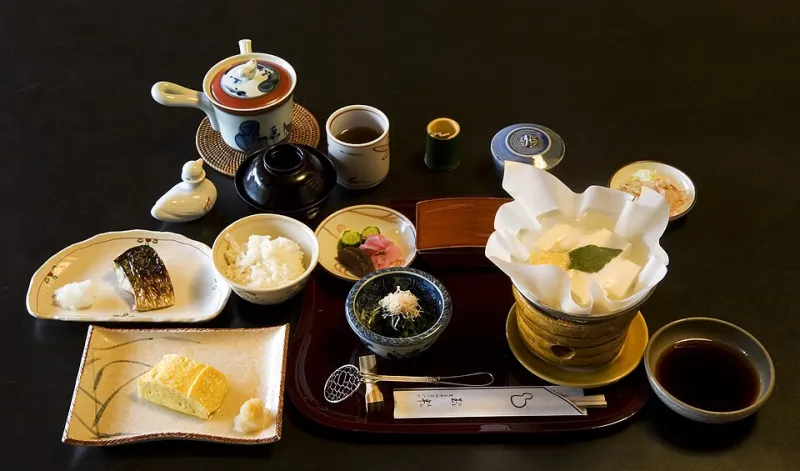
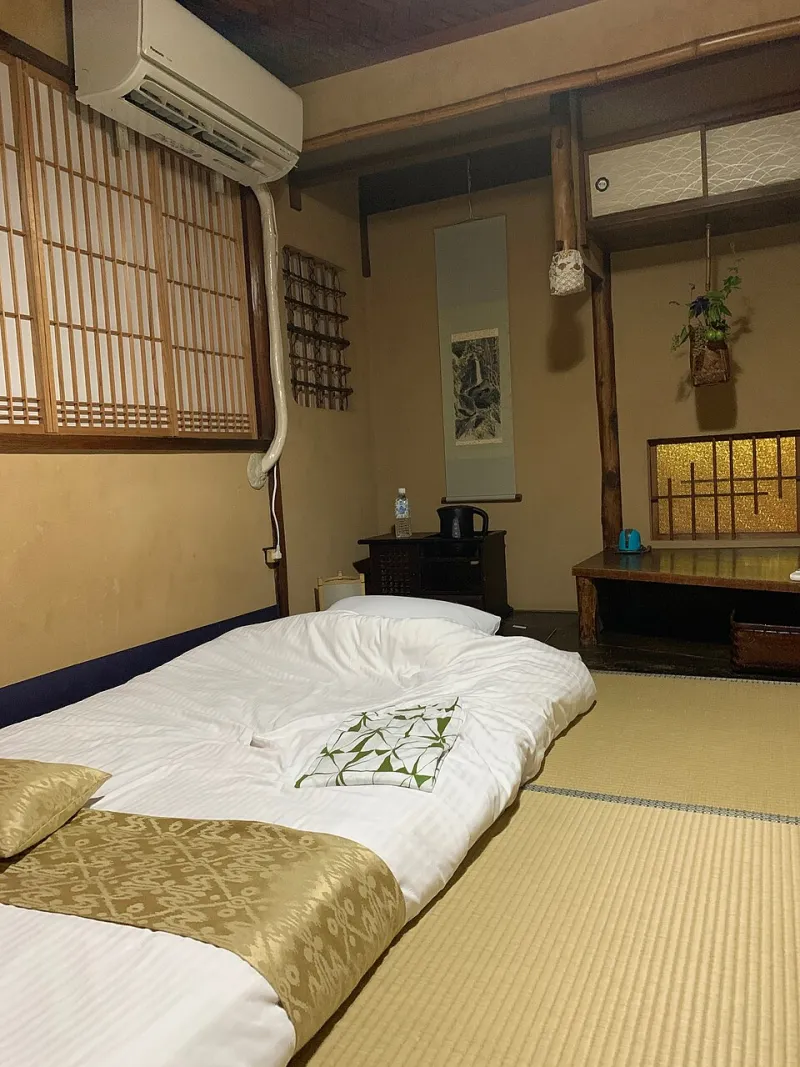
At a traditional Japanese inn, that dynamic is largely reversed. The inn staff — and especially the nakai-san, the room attendant assigned to you — have already thought through what you'll want, when you'll want it, and how it should be presented. Your kaiseki dinner appears at the right time without you scheduling it. Your futon is laid out while you're soaking in the onsen. The tea is freshly made when you return to your room.
You never had to ask, because asking was never the point.
This is a form of hospitality that requires genuine skill and attention. It's not about scripts or service standards checked off a list. It's about reading people — their pace, their mood, their preferences — and responding before the need becomes a request.
Why Americans Are Paying Premium Prices to Unplug
Here's a data point that tells you everything: some of the most sought-after ryokan experiences in Japan now market their remoteness as a feature. Limited cell service. No lobby bar with a DJ on weekends. Meals served in your room, in silence, by someone who bows and disappears. And travelers — particularly Americans — are booking these places out months in advance.
The premium isn't for thread count or square footage. It's for the 48-hour permission slip to be completely, guiltlessly unreachable.
There's a reason this resonates so hard right now. American culture has spent the last decade optimizing for connectivity, productivity, and frictionless access to everything. We've built an entire economy around the idea that faster, louder, and more available is better. And a lot of us are quietly exhausted by it.
A ryokan doesn't just give you a nice room. It gives you a different relationship with time. An evening that isn't structured around content consumption or social performance. A morning that starts with the sound of a garden, not a notification.
That's not a small thing. For a lot of travelers, it turns out to be the whole thing.
What This Actually Looks Like in Practice
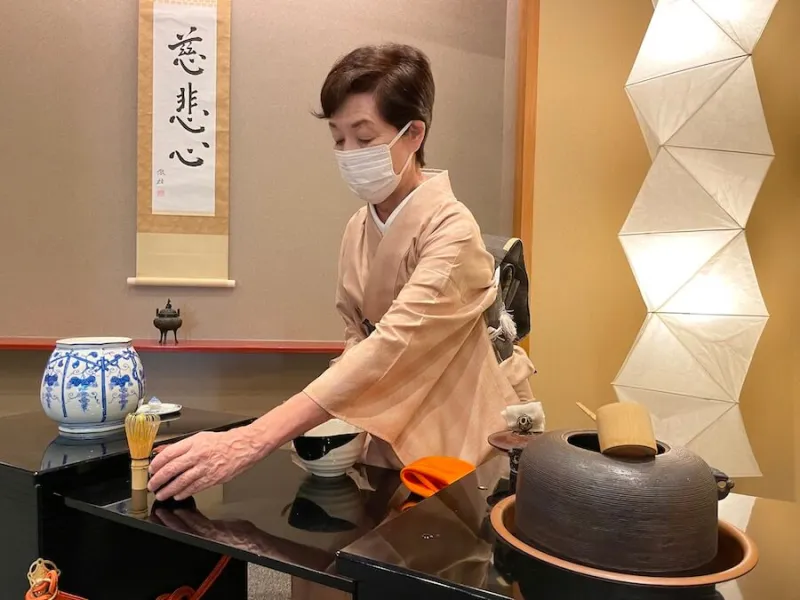
If you've never stayed at a traditional Japanese inn, it helps to have a concrete picture. You arrive, often in the late afternoon. Someone meets you — sometimes at the station, sometimes at the door — and guides you through the process of settling in. Shoes off at the entrance. Yukata (a light cotton robe) waiting in your room. Green tea and a seasonal sweet, already prepared.
Your nakai-san explains the rhythm of the stay: when dinner will be served, where the baths are, what time breakfast appears. Then she leaves. And the quiet begins.
Dinner arrives in your room as a procession of small, beautiful dishes — each one connected to the season, the region, the history of the inn's kitchen. You eat at your own pace. Nobody checks in to ask how everything is tasting. Nobody offers you dessert you didn't ask for. The meal ends when you're done, not when the restaurant needs your table.
You sleep on a futon that someone laid out while you were bathing. You wake to birdsong, or rain, or the distant sound of someone raking gravel in the garden below. Breakfast appears. It's perfect.
At no point during any of this did you have to manage anything.
The Takeaway for American Travelers
We're not saying US hotels are doing it wrong — plenty of travelers genuinely want the full-service, always-available model, and there's nothing wrong with that. But if you've ever come home from a vacation feeling like you need another vacation, it might be worth asking what kind of rest you're actually looking for.
Japan's traditional inns have been refining the art of genuine hospitality for hundreds of years. The philosophy of ma — of giving guests space, silence, and the gift of not being constantly attended to — isn't a design quirk. It's a deeply considered approach to human wellbeing.
And right now, for a lot of Americans, it's exactly what's missing.
On Yado exists because we believe the best travel experiences aren't always the loudest ones. Sometimes the most memorable night of your trip is the one where nothing happened — except everything, quietly, exactly as it should.