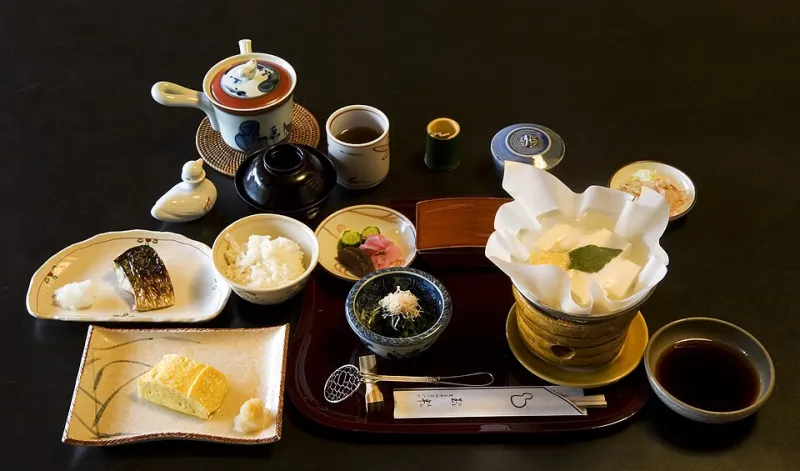
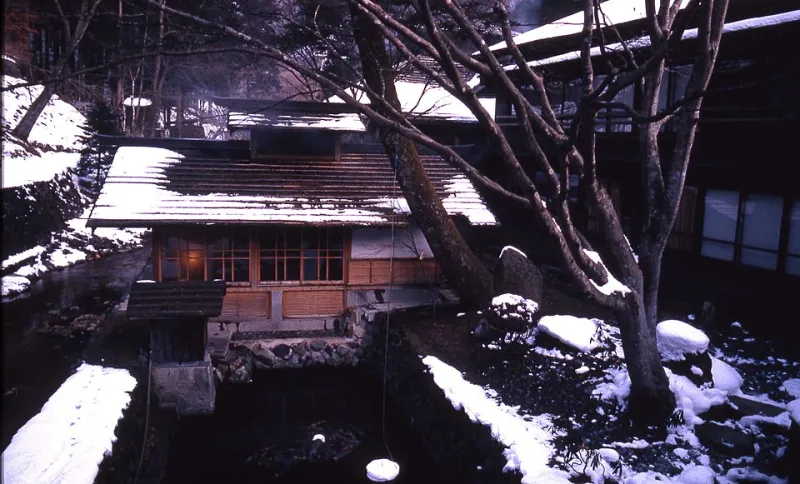
No App Can Do What Your Innkeeper Just Did
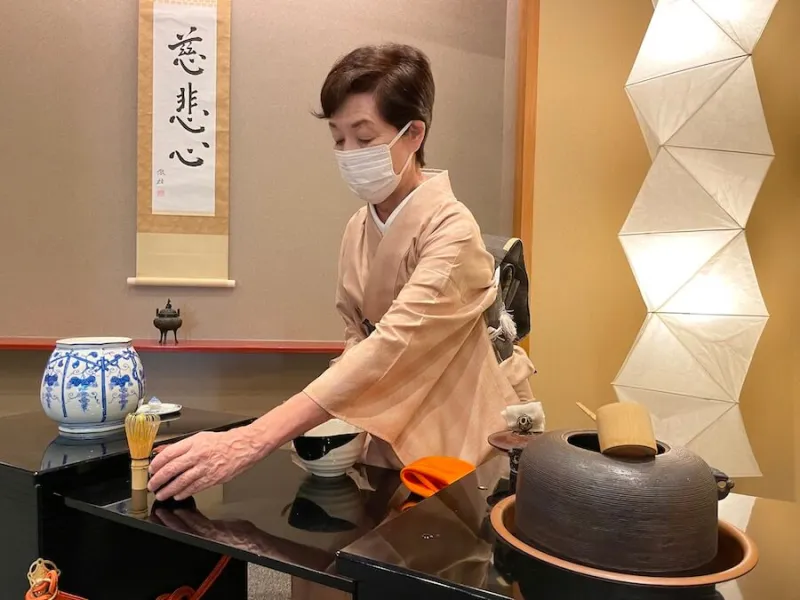
Photo: Japanese ryokan innkeeper serving tea to guest in traditional room, via japanko-official.com
You check into a hotel in the US and the app already knows you prefer a high floor, extra pillows, and a room away from the elevator. It's convenient. It's efficient. And somehow, it still feels a little hollow.
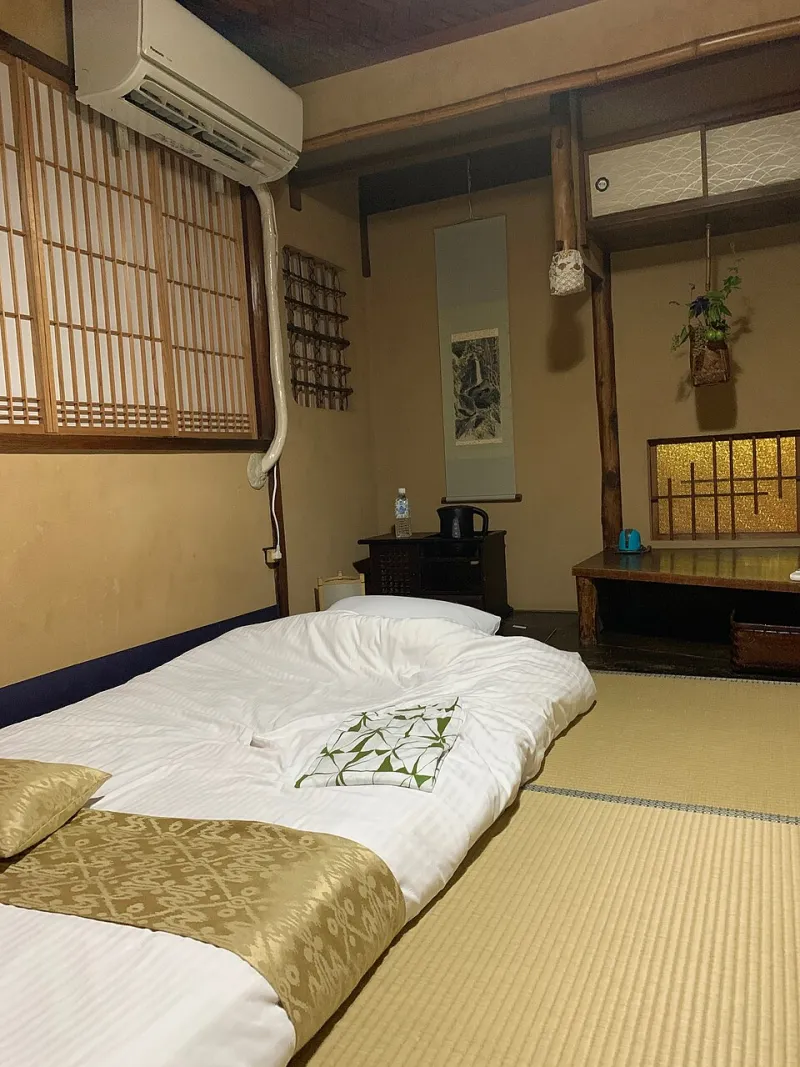
Then you arrive at a ryokan in rural Japan — no loyalty tier, no preference survey, no chatbot — and within twenty minutes, a woman in a kimono has quietly set your room at exactly the right temperature, placed a cup of tea at the precise moment you sat down, and arranged your futon facing the garden rather than the wall. You never said a word.
How did she know?
The answer isn't data. It's something much older.
The Skill That Predates Silicon Valley by About 800 Years
Japanese inn culture stretches back centuries, and with it came a philosophy of hosting that is fundamentally observational. Traditional innkeepers — and the staff they train — learn to read guests through presence, not profiles. The way someone walks in from the cold. Whether they pause at the garden or move straight to their room. How they hold their bag. Whether they make eye contact or look down.
This practice is rooted in a broader Japanese cultural concept sometimes described as ma — an attentiveness to space, pause, and the unspoken. In hospitality, it translates into a kind of quiet vigilance. Staff aren't hovering. They're noticing.
For American travelers accustomed to hospitality that announces itself loudly — the cheerful check-in script, the upsell offer, the "How's everything tasting?" interruption mid-bite — this can feel almost disorienting at first. Nobody is performing for you. They're simply paying attention.
What "Being Seen" Actually Feels Like
Ask anyone who's stayed at a quality ryokan and they'll usually struggle to articulate exactly what made it special. The food was incredible, yes. The hot spring was stunning. But there's often something else they're reaching for.
It felt like they actually cared.
That's not a small thing. In an era where personalization has become a tech feature rather than a human trait, genuine attentiveness hits differently. When a host notices you've barely touched your sake and gently offers tea instead — without you having to ask, without you even fully registering your own preference — something in you relaxes in a way that a perfectly curated Spotify playlist simply cannot produce.
This is the innkeeper's intuition at work. It's not magic. It's mastery.
Training the Eye, Not the Algorithm
At many traditional inns, this observational skill is passed down through years of mentorship. Junior staff shadow experienced hosts not to learn scripts, but to develop their eye. They're taught to watch without staring, to anticipate without presuming, to act without drawing attention to the act itself.
The goal isn't to impress the guest with how much you've noticed. It's to make the guest feel, without knowing exactly why, that they're in exactly the right place.
Compare that to the modern hospitality model, which increasingly relies on data aggregation — your past stays, your reviews, your credit card spending patterns — to simulate personalization. It's clever. But it's also fundamentally reactive. It tells a hotel what you've wanted before. It can't read what you need right now, in this moment, after a long flight and a two-hour train ride through mountains you've never seen.
A good innkeeper can.
The American Traveler's Reckoning
There's a reason so many Americans come back from Japan talking about the ryokan experience as a kind of revelation. It's not just the aesthetics — the sliding screens, the tatami, the cypress-wood baths. It's the recalibration.
We live in a country that has outsourced so many forms of human attentiveness to technology that we've almost forgotten what the original felt like. We get "personalized" emails that address us by first name and recommend products we already bought. We get "curated" hotel experiences built from data points that know our history but not our mood.
And then we step into a ryokan and someone brings us exactly the right thing at exactly the right moment, and we don't know whether to say thank you or just sit quietly and feel something.
Many travelers choose the latter.
What This Means When You're Booking
Not every inn in Japan operates at this level. Like any craft, the quality of human attentiveness varies. Smaller, family-run ryokan — particularly those that have been in operation for multiple generations — tend to carry this tradition most deeply. The staff-to-guest ratio matters. A sprawling resort with hundreds of rooms operates differently than a twelve-room inn where the owner's family still runs the kitchen.
When you're searching for a place to stay, pay attention to the details that signal this kind of care. Does the inn describe its hospitality philosophy? Are there notes about seasonal touches, personalized arrangements, or staff who have been with the property for decades? These aren't just marketing points — they're indicators of a culture that values the human read over the automated response.
At On Yado, we think a lot about this. The inns we highlight aren't just beautiful places to sleep. They're places where someone has spent years learning to see you — the real you, the tired-from-traveling you, the quietly-hoping-for-something-meaningful you — and respond in kind.
The Quiet Luxury of Being Known
There's a version of luxury that's about thread counts and tasting menus and infinity pools. It's nice. Nobody's arguing otherwise.
But there's another kind of luxury that's harder to photograph and impossible to quantify in a star rating. It's the luxury of being in the presence of someone who is genuinely, skillfully, humbly paying attention to you.
In Japan's traditional inns, that luxury has been quietly practiced for centuries — long before anyone thought to call it a differentiator, long before hospitality became an industry vertical, long before an algorithm tried to replicate it and fell just a little bit short.
You don't need a data point to feel the difference. You just need one night at the right inn.