Every Dish Has a Story: The Family Recipes and Regional Roots Hidden in Your Ryokan Meal
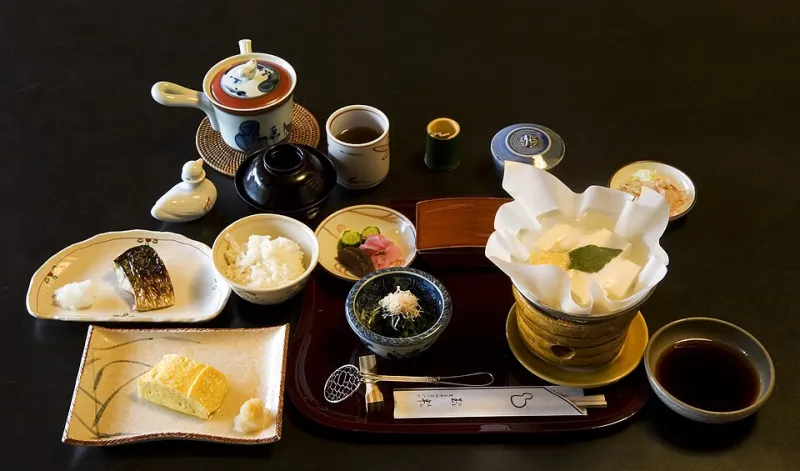
Photo: MichaelMaggs, CC BY-SA 3.0, via Wikimedia Commons
Somewhere in the mountains of Yamagata Prefecture, a woman in her seventies wakes up before dawn to start the soup.
She's been doing this for forty years—the same dashi base, the same seasonal vegetables pulled from the same hillside farms her mother used before her. By the time guests at her small family-run ryokan slide open their breakfast trays, that soup has already lived a life they know nothing about. And that, she'll tell you with a laugh, is exactly how it should be.
This is ryokan food. Not fine dining in the Western sense. Not Instagram-optimized plating designed for maximum engagement. Something quieter and, once you understand it, considerably more moving.
Why Ryokan Meals Feel Different From Everything Else
American travelers who've eaten well in Japan—at the ramen counters, the sushi bars, the izakayas—often describe ryokan meals as a different category of experience altogether. It's not always that the food is better, exactly. It's that it feels connected in a way that's hard to put into words.
Part of that connection is the format. A traditional kaiseki dinner at a ryokan unfolds in courses—small, precisely composed dishes that arrive one at a time over the course of an hour or two. There's no rushing, no choosing from a menu. The kitchen decides what you eat based on what's in season, what's local, and what the chef or innkeeper wants to share with you today. You are, in a real sense, a guest at someone's table rather than a customer placing an order.
But the deeper connection is historical. Ryokan cuisine—whether it's the elaborate kaiseki style or the simpler, heartier fare of a family-run minshuku—is one of the few food traditions in the world where the recipes haven't been standardized, franchised, or optimized for scale. They've been passed down, adjusted, argued over, and fiercely protected by the families who cook them.
What the Seasons Are Actually Telling You
If there's one concept that unlocks ryokan food for American travelers, it's shun (旬)—the Japanese idea of peak seasonality. Not "seasonal" in the way American restaurant menus use the word (meaning roughly "we have this right now"). Shun is more specific: the precise window when an ingredient is at its most flavorful, most nutritious, and most worth eating. A week too early or too late, and a true shun ingredient isn't worth serving.
Ryokan chefs and innkeepers take shun seriously in a way that can feel almost spiritual. In spring, you might find fresh bamboo shoots prepared three different ways across a single dinner. In autumn, matsutake mushrooms—earthy, intensely fragrant, and extraordinarily expensive—might appear in a simple clear soup that lets the ingredient speak without interference. In winter, a hot pot of locally caught fish might anchor the meal, its broth built slowly from the bones.
When you understand shun, each dish starts to function like a timestamp. You're not just eating dinner—you're eating this moment in this place. That specific bamboo shoot grew in the hillside behind the inn. That fish was pulled from the river two kilometers away this morning. The meal is, in a very literal sense, a portrait of where you are and when.
The Stories Behind the Small Dishes
Kaiseki meals are famous for their elaborate main courses, but experienced ryokan travelers will tell you the small dishes are where the real storytelling lives.
Take the pickles—tsukemono—that appear at almost every traditional inn breakfast. These aren't an afterthought. In many ryokans, the pickle selection represents a direct line to regional food culture: the particular vegetables grown in that prefecture, the specific fermentation methods developed over centuries to preserve food through harsh winters, the family recipe that the current innkeeper's grandmother developed and that hasn't changed since.
Or consider dashimaki tamago, the rolled omelet that appears at countless ryokan breakfasts. It looks simple. It is not simple. The ratio of dashi to egg, the temperature of the pan, the precise rolling technique—these are the kinds of details that separate a good dashimaki from a great one, and experienced innkeepers will tell you they can taste the difference between their version and anyone else's.
One innkeeper in Kyoto's outskirts described her family's dashimaki recipe as "the thing my mother argued about most." Her grandmother used a slightly sweeter ratio; her mother preferred a more savory profile. The current version is a negotiated compromise between two dead women's opinions, still being debated by the living ones. That omelet has a whole family drama baked into it.
Minshuku Food: The Unpolished Version That Hits Hardest
If kaiseki is ryokan cuisine at its most refined, minshuku food is its most honest. Family-run guesthouses typically serve what the owners eat themselves—regional home cooking that varies wildly by location and rarely appears in any guidebook.
In a fishing village minshuku in Hokkaido, breakfast might mean grilled salmon, pickled kelp, and rice cooked with the local water. In a farmhouse minshuku in rural Gifu, dinner might be a slow-simmered mountain vegetable stew that takes most of the day to prepare and tastes like it. Neither meal would win a Michelin star. Both would be, for many travelers, the most memorable things they ate in Japan.
The informality of minshuku dining also creates something rare: actual conversation with the people who made your food. Owners often eat in the same room as guests, or at least stop by to explain what's on the table. This is where you learn that the miso paste was made in-house and aged for two years. That the tofu came from the shop three streets over that's been operating since the Meiji era. That the wild herbs in the side dish were foraged that morning by the owner's teenage daughter.
How to Actually Receive What the Kitchen Is Offering
American travelers sometimes struggle with ryokan meals, not because the food is bad but because the format is unfamiliar. A few mindset shifts help:
Resist the urge to identify everything immediately. Part of the pleasure is letting the flavors register before you know what you're eating. Ask questions after, not during.
Eat in the order dishes are served. The sequence is deliberate. Light before heavy, delicate before bold. Disrupting it is like reading a book out of order.
Don't skip breakfast. American travelers sometimes underestimate the ryokan breakfast, assuming it'll be too unfamiliar or too light. It is almost always one of the most carefully composed meals of the stay. The miso soup alone is usually worth waking up for.
Ask about one dish per meal. Most innkeepers are genuinely happy to talk about their food—where it came from, how it's made, why it's on the menu today. You don't need to interrogate every plate. Pick one thing you're curious about and ask. The answer is usually a small story worth hearing.
The Kitchen Remembers What We've Forgotten
In a food culture increasingly dominated by delivery apps, ghost kitchens, and meals engineered for maximum convenience, there's something almost countercultural about ryokan and minshuku cooking. It's slow. It's local. It's personal. It changes with the weather and the season and whatever the farmer down the road happened to bring in this week.
For American travelers who've spent years eating food with no particular origin story, sitting down to a ryokan meal can feel like being handed something you didn't know you were missing. Not just nourishment, but narrative. Not just dinner, but a place to belong, briefly, in a tradition that's been feeding people carefully and with intention for a very long time.
The woman in Yamagata is still making her soup. The recipe isn't written down anywhere. It lives, for now, in her hands.